Overview
Choosing a weight management program in Australia can feel overwhelming. There are many options available, including free government-supported lifestyle programs, online nutrition platforms, group coaching and personalised guidance from qualified health professionals.
Each approach offers different features, levels of support and costs. Some focus on healthy eating and physical activity, while others provide structured meal planning, education, progress tracking or regular coaching sessions.
The most suitable option depends on your individual health circumstances, lifestyle, personal preferences, budget and long-term goals.
There is no single program that works equally well for everyone.
This 2026 guide explores weight management programs in Australia, explains the differences between available approaches and offers practical information to help readers make informed choices.
Comparing free and practitioner-led weight management support?
Free programs can be a useful starting point. If you want an individual review of your health history, goals and suitable next steps, check whether The Amino Hub’s online weight management consultation is appropriate for you. Consultation does not guarantee treatment or a prescription.
What Is a Weight Management Program?
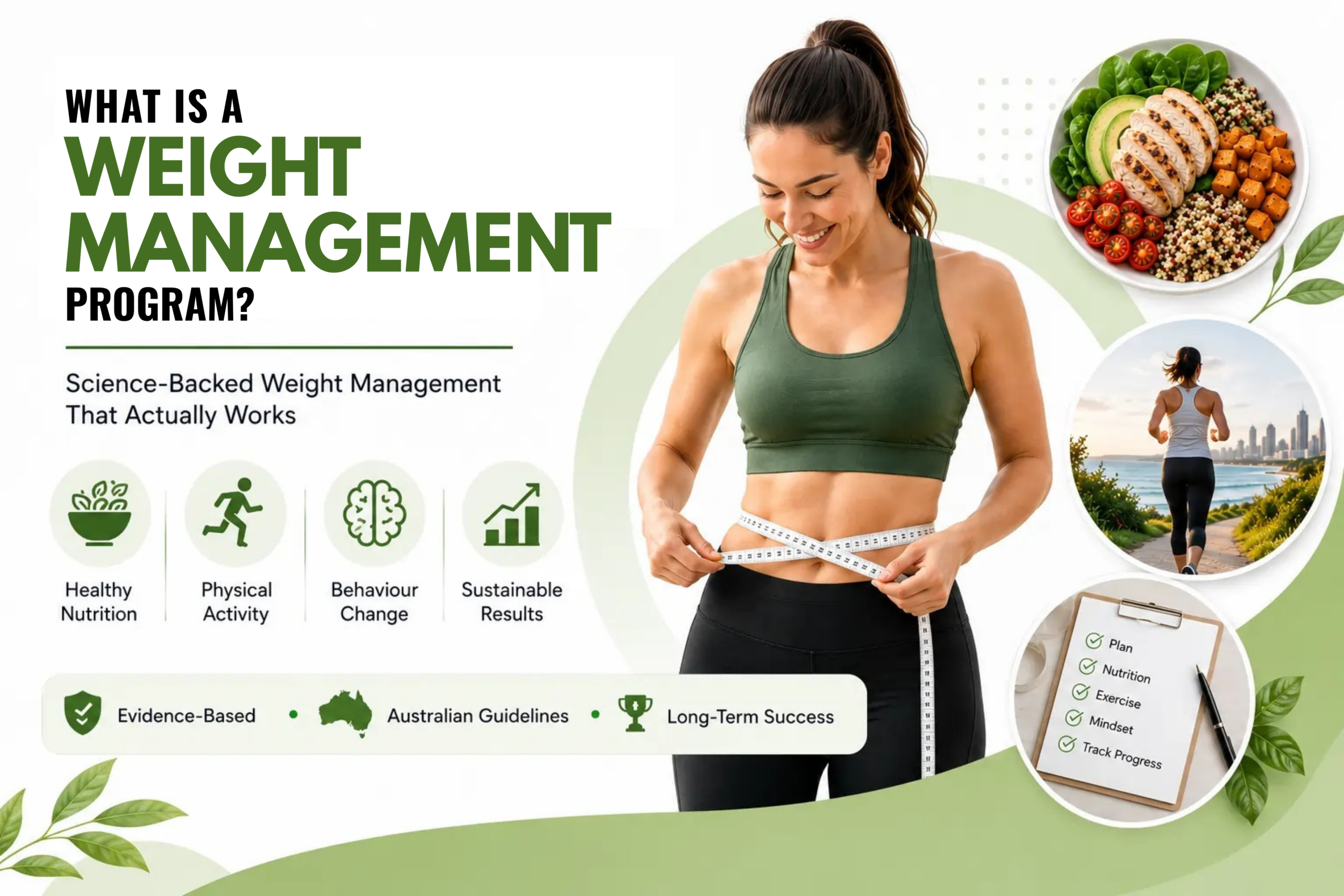
A weight management program is a structured approach to building habits that support physical health and general wellbeing.
Programs may include guidance relating to:
- Balanced nutrition and everyday food choices.
- Physical activity and reducing prolonged sitting.
- Understanding appropriate portion sizes.
- Building consistent eating habits.
- Sleep and daily routines.
- Stress management and emotional wellbeing.
- Setting realistic goals.
- Monitoring progress over time.
Some programs offer individual appointments, while others provide digital resources, group education or self-guided learning.
The level of structure and support varies depending on the provider.
What Makes a Program Worth Considering?
A useful program should provide clear information about what participants receive and allow them to make informed decisions.
Important factors include:
- Qualified support: Access to appropriately qualified professionals where relevant.
- Balanced nutrition: Guidance that encourages dietary variety and nutritional adequacy.
- Realistic expectations: No promises of guaranteed or unusually rapid changes.
- Flexibility: Activities and eating patterns that can fit everyday life.
- Transparent costs: Clear fees, payment terms and cancellation conditions.
- Accessibility: Suitable options for work schedules, location and personal needs.
- Long-term habits: Practical strategies that can be maintained beyond the initial program period.
An approach that suits one person may not suit another.
Weight Management Programs in Australia: Quick Comparison
Weight management programs can be grouped into several broad categories.
The following table compares their general characteristics rather than ranking individual providers.
| Program type | Typical features | Cost considerations | Questions to consider |
|---|---|---|---|
| Government-supported lifestyle programs | Healthy eating education, physical activity guidance and coaching | Often free for eligible participants | Do you meet the location and eligibility requirements? |
| Online nutrition programs | Digital meal planning, recipes and tracking tools | Subscription or membership fees may apply | Are the resources practical for your household? |
| Individual dietitian guidance | Personalised nutrition information and goal setting | Consultation fees vary | Are the provider’s qualifications and fees clear? |
| Group lifestyle programs | Education sessions and peer support | Free or paid, depending on the provider | Do the meeting times and group format suit you? |
| Self-guided programs | Meal planning resources and activity tracking | Often low-cost or free | Do you prefer to work independently? |
| Activity-focused programs | Movement planning, strength exercises and fitness guidance | Membership or session fees may apply | Are activities appropriate for your abilities and experience? |
These categories describe common features. Availability, inclusions and costs differ between individual programs.
Free Government-Supported Lifestyle Programs in Australia
Several Australian state governments support programs designed to help eligible residents build healthier everyday habits.
These services are not necessarily focused on achieving a particular amount of weight loss. Many emphasise nutrition, physical activity, wellbeing and reducing longer-term health risks.
1. Get Healthy Service — New South Wales
The NSW Government’s Get Healthy Service provides free telephone and online health coaching for people aged 16 years and over living in New South Wales.
The service supports participants in setting realistic health goals and developing practical lifestyle habits.
Areas of support can include:
- Making healthier food choices.
- Increasing daily physical activity.
- Managing everyday health goals.
- Building motivation and consistency.
- Improving general health and wellbeing.
Eligible participants can access up to 10 coaching calls with a qualified health coach.
The service can be accessed remotely, making it suitable for people who prefer guidance from home.
Availability: New South Wales
Format: Telephone and online coaching
Cost: Free for eligible participants
Official information: https://www.nsw.gov.au/health-and-wellbeing/healthy-living/gethealthyservice
2. My health for life — Queensland
My health for life is a Queensland Government-funded healthy lifestyle program.
It provides access to qualified health coaches who support eligible participants in developing practical habits.
Topics may include:
- Nutrition and food choices.
- Physical activity.
- Sleep quality.
- Stress management.
- Understanding personal health goals.
- Maintaining healthy routines.
The program includes six coaching sessions, with participation options that may include groups, online sessions or telephone coaching.
Eligibility requirements apply, and residents can complete a health check to find out whether the program is suitable for them.
Availability: Queensland
Format: Coaching sessions, including remote options
Cost: Free for eligible participants
Official information: https://www.myhealthforlife.com.au/
3. Life! Program — Victoria
The Life! program is funded by the Victorian Government and managed by Diabetes Victoria.
It supports eligible participants in developing healthier lifestyle habits and improving their understanding of personal health risks.
Program topics include:
- Healthy eating.
- Physical activity.
- Stress management.
- Sleep and wellbeing.
- Goal setting.
- Maintaining positive habits.
Participation options include group learning and telephone health coaching, with online options available for some sessions.
Eligibility depends on individual circumstances and program criteria.
Availability: Primarily Victoria, subject to eligibility
Format: Group sessions and health coaching
Cost: Free for eligible participants
Official information: https://lifeprogram.org.au/
Comparison of Government-Supported Programs
| Program | Location | Main focus | Delivery format | Cost |
|---|---|---|---|---|
| Get Healthy Service | NSW | Healthy eating, activity and lifestyle goals | Phone and online | Free for eligible residents |
| My health for life | Queensland | Nutrition, movement and long-term lifestyle habits | Group, online or phone coaching | Free for eligible residents |
| Life! Program | Victoria | Healthy eating, activity, stress and health-risk awareness | Group and remote coaching | Free for eligible participants |
These examples are provided for general information, not as a ranking.
Program conditions can change. Check the official websites for current eligibility, enrolment and availability.
Paid Weight Management Programs in Australia
Private weight management programs may provide additional flexibility, digital resources or ongoing membership features.
Common inclusions include:
- Structured meal plans.
- Recipe libraries.
- Grocery planning resources.
- Food and activity journals.
- Goal-setting tools.
- Educational videos.
- Online workshops.
- Progress tracking.
- Community discussion spaces.
Some programs focus primarily on nutrition education, while others combine food planning, physical activity and behavioural support.
Examples of Online Programs
Two established examples available to Australian consumers are the CSIRO Total Wellbeing Diet online program and WeightWatchers Australia.
The CSIRO Total Wellbeing Diet online program includes meal-planning resources, recipes and digital tracking tools. Its approach is based on nutrition research developed by CSIRO.
WeightWatchers Australia offers digital food-planning and tracking features, with workshop and community options depending on the membership selected.
These are examples of different online program formats, not recommendations or endorsements. Their available features, eligibility requirements and subscription conditions should be checked directly with the providers.
What Should You Check Before Paying?
Before joining a commercial program, review:
- The full membership cost.
- The minimum commitment period.
- Whether subscriptions renew automatically.
- Cancellation and refund conditions.
- The qualifications of people providing individual guidance.
- What digital tools or resources are included.
- Whether the program accommodates dietary preferences.
- How personal information is collected and used.
Avoid choosing a program based only on advertising claims, star ratings or unusually dramatic examples of individual progress.
Online vs In-Person Weight Management Programs
Online and in-person programs provide different experiences.
Neither format is automatically the most suitable for everyone.
| Factor | Online programs | In-person programs |
|---|---|---|
| Location | Usually accessible from home | Requires travel to a physical location |
| Scheduling | May offer greater flexibility | Depends on appointment or session times |
| Interaction | Digital resources, calls or online groups | Face-to-face communication |
| Progress tracking | Often uses apps or online tools | May use discussions, worksheets or other records |
| Accessibility | May suit rural or time-poor participants | May suit those who prefer direct interaction |
| Cost | Varies by subscription | Varies by provider and frequency |
| Personal guidance | Depends on membership inclusions | Depends on the professional and service |
Who Might Prefer an Online Format?
An online program may be convenient for someone who:
- Works irregular hours.
- Lives in a regional or remote location.
- Prefers digital tools.
- Wants to access educational resources at home.
- Enjoys independent learning.
Who Might Prefer an In-Person Format?
An in-person approach may suit someone who:
- Prefers face-to-face discussions.
- Enjoys structured appointments.
- Benefits from direct interaction.
- Wants support adapting activities to personal circumstances.
- Prefers group learning in a physical setting.
The most useful format is one that the individual can access consistently and comfortably.
Comparing Common Nutrition Approaches
Different weight management programs use different approaches to food planning.
The Australian Dietary Guidelines encourage consuming a variety of nutritious foods from the five major food groups.
Some programs place additional emphasis on particular eating patterns.
| Eating approach | Main characteristics | Practical considerations |
|---|---|---|
| Balanced Australian eating pattern | Variety across the five food groups | Flexible and compatible with different household needs |
| Mediterranean-style eating | Vegetables, legumes, wholegrains, olive oil, nuts and fish | Emphasises dietary variety and largely unsaturated fats |
| Higher-protein eating pattern | Includes protein-rich foods across meals | Individual protein needs vary |
| Plant-based eating pattern | Emphasises vegetables, legumes, fruit, grains, nuts and seeds | Requires attention to nutritional variety and some nutrients |
| Portion-awareness approach | Focuses on amounts eaten and recognition of hunger and fullness | Does not necessarily require excluding particular food groups |
| Meal-planning approach | Plans meals and groceries in advance | May help organise food choices around a busy schedule |
No single eating pattern is appropriate for every individual.
People with specific dietary requirements, ongoing health concerns, pregnancy-related nutritional needs or a history of disordered eating should seek appropriately qualified guidance before making significant dietary changes.
The Importance of Physical Activity
Physical activity contributes to cardiovascular health, muscle strength, mobility and general wellbeing.
A weight management program that incorporates movement should consider a person’s abilities, preferences and daily routine.
Australian Government movement recommendations for adults aged 18–64 include:
- Being physically active most days, preferably every day.
- Undertaking moderate- to vigorous-intensity activity for 30 minutes or more on most days.
- Including muscle-strengthening activities on at least two days each week.
- Incorporating activities that support mobility, balance and coordination.
- Breaking up long periods of sitting.
- Getting approximately seven to nine hours of good-quality sleep each night.
Examples of everyday movement include walking, cycling, swimming, gardening, dancing and suitable strength exercises.
People starting from low activity levels may find it useful to begin gradually and build consistency over time.
Activity should reflect personal capabilities and health circumstances.
How to Choose a Weight Management Program
Choosing a program involves more than comparing prices or advertisements.
A practical approach is to evaluate several important areas.
1. Consider Your Main Health Goals
People have different reasons for exploring weight management.
These may include improving physical fitness, developing balanced eating habits, increasing confidence with food planning or building a more consistent routine.
Understanding your goals can make it easier to compare available options.
2. Consider Your Budget
Free government-supported programs may be a useful starting point for eligible Australians.
Private programs vary in price and structure.
Before committing, check the total cost over the entire membership period rather than focusing only on an introductory offer.
3. Review the Level of Support
Some people prefer independent learning.
Others benefit from regular coaching, group sessions or individual guidance from an accredited practising dietitian.
Look closely at what support is actually included.
4. Consider Your Daily Routine
An approach that requires more time than you have available may be difficult to sustain.
Consider:
- Work schedules.
- Household responsibilities.
- Meal preparation time.
- Access to suitable foods.
- Transport.
- Internet access.
- Preferred activity options.
A practical program should fit your circumstances rather than requiring unrealistic changes.
5. Check the Quality of Information
Reliable health information should be clear, balanced and supported by credible sources.
Look for references to recognised Australian health guidance and appropriately qualified professionals.
Be cautious about programs that rely heavily on dramatic testimonials, promises of rapid outcomes or claims that one approach works for everyone.
6. Review Flexibility and Accessibility
Consider whether the program accommodates:
- Vegetarian or other dietary preferences.
- Food allergies or intolerances.
- Different cultural food traditions.
- Different levels of physical ability.
- Shift work or caring responsibilities.
- Regional or remote living.
7. Think About Long-Term Sustainability
Healthy routines can change throughout life.
A useful program should help participants understand how to maintain practical habits as circumstances evolve.
Questions to Ask Before Joining a Program
Use this checklist when comparing options.
| Question | Why it matters |
|---|---|
| What exactly is included? | Helps distinguish core features from optional extras |
| Who develops the nutrition guidance? | Helps assess the qualifications behind the information |
| Is the program suitable for my circumstances? | Encourages consideration of individual needs |
| Are all fees clearly disclosed? | Reduces the risk of unexpected expenses |
| Can I cancel easily? | Helps avoid unwanted ongoing commitments |
| Are the recommendations realistic? | Supports sustainable lifestyle choices |
| Does the program allow flexibility? | Makes it easier to adapt to everyday life |
| Is personal information handled securely? | Supports informed decisions about privacy |
| What happens after the initial program? | Helps assess longer-term support and resources |
You can compare answers from different providers without relying on promotional rankings.
Weight Management Considerations for Different Groups
Adults With Busy Work Schedules
People balancing work, family and other responsibilities may prefer flexible meal-planning resources or remote coaching.
Simple strategies such as preparing groceries in advance, planning convenient meals and taking regular movement breaks can support consistency.
Men and Women
Nutritional and energy needs vary based on body composition, activity level, age and other individual factors.
Programs should consider these differences without relying on fixed food quantities or exercise expectations based on gender alone.
Older Adults
Maintaining muscle strength, mobility, nutrition and independence becomes increasingly important with age.
Older adults may benefit from guidance that considers their physical abilities and nutritional needs rather than focusing exclusively on body weight.
People With Ongoing Health Conditions
Individual guidance may be particularly valuable when changes in eating patterns or physical activity could affect existing health concerns.
A general practitioner can help assess which forms of support are appropriate.
Some eligible Australians may be able to access Medicare-supported allied health appointments through a GP chronic condition management plan. Eligibility and referral requirements apply.
People Who Prefer Independent Learning
Not everyone needs a paid membership.
Free Australian Government resources, meal-planning tools and everyday activity guides may provide useful starting points for people who prefer to develop habits independently.
Setting Realistic Expectations
Weight management is influenced by many factors, including genetics, eating patterns, physical activity, age, sleep, stress and health circumstances.
Changes do not occur at the same rate for everyone.
Rather than focusing only on a particular number, people may find it useful to monitor broader indicators of wellbeing, including:
- Consistency with balanced eating habits.
- Enjoyment of regular movement.
- Improved physical fitness.
- Sleep quality.
- Ability to complete everyday activities.
- Confidence preparing nutritious meals.
- General energy and wellbeing.
Progress may be gradual and can vary over time.
A responsible program should explain these differences rather than promise a specific result.
Frequently Asked Questions
What Are the Best Weight Loss Programs in Australia?
There is no single best program for everyone.
When comparing weight loss programs in Australia, consider nutritional guidance, accessibility, professional qualifications, fees, flexibility and individual circumstances.
The most suitable choice depends on personal needs and preferences.
Are There Free Weight Management Programs in Australia?
Yes.
Examples include the NSW Get Healthy Service, Queensland’s My health for life and Victoria’s Life! program.
Eligibility requirements and available support vary by location.
Can I Follow a Weight Management Program Online?
Yes.
Online programs may provide meal-planning resources, activity guidance, educational content and coaching.
Available features vary between providers.
Do I Need a Paid Program?
Not necessarily.
Many people can access reliable information through Australian Government resources or eligible state-funded lifestyle programs.
Others may prefer the structure offered by a paid service.
Is a Higher-Protein Eating Pattern Suitable for Everyone?
Protein is an essential nutrient, but individual requirements vary.
Age, physical activity, existing health concerns and dietary preferences should be considered when planning protein intake.
How Important Is Exercise for Weight Management?
Regular physical activity contributes to overall health and physical function.
Movement supports cardiovascular fitness, muscle strength and general wellbeing, regardless of whether body weight changes.
How Can I Tell Whether a Program Is Credible?
Look for clear information about the provider, realistic claims, transparent costs, relevant professional qualifications and references to reliable health guidance.
Be cautious about unsupported comparisons and promises of guaranteed results.
Can a GP Help Me Choose a Program?
A general practitioner can consider your health circumstances and advise whether individual nutrition or activity guidance may be appropriate.
They can also explain potential eligibility for relevant community or allied health services.
Does the Most Expensive Program Offer the Best Support?
Not necessarily.
Cost alone does not indicate quality.
Compare what is included, the qualifications of support staff, accessibility, contract terms and whether the program meets your needs.
Key Takeaways
Australia offers a range of weight management options, including free government-supported programs, digital platforms, group education and individual nutrition guidance.
The most suitable option depends on health needs, personal preferences, lifestyle and budget.
When comparing programs, focus on balanced nutrition, appropriate physical activity, realistic expectations, transparent costs and sustainable habits.
Free programs may provide useful support for eligible Australians, while paid programs can offer additional tools or flexibility depending on the provider.
No program is universally suitable, and no specific result can be guaranteed.
Making informed choices and developing realistic daily habits can support long-term health and wellbeing.
References and Further Reading
- Australian Government — Australian Dietary Guidelines
https://www.eatforhealth.gov.au/guidelines/australian-dietary-guidelines-1-5 - Australian Government — Movement Recommendations for Adults Aged 18–64
https://www.health.gov.au/topics/physical-activity/24-hour-movement-guidelines-for-all-australians/recommendations-for-adults-18-to-64-years - NSW Government — Get Healthy Service
https://www.nsw.gov.au/health-and-wellbeing/healthy-living/gethealthyservice - Queensland — My health for life
https://www.myhealthforlife.com.au/ - Victoria — Life! Program
https://lifeprogram.org.au/ - Services Australia — GP Chronic Condition Management Plans
https://www.servicesaustralia.gov.au/services-available-under-gp-chronic-condition-management-plan
This article provides general health and wellbeing information only and is not a substitute for individual advice from a qualified health professional.
Program details are based on publicly available information reviewed in October 2026. Eligibility, inclusions, membership conditions and availability may change. The programs mentioned are examples for comparison, not ranked recommendations or endorsements.